
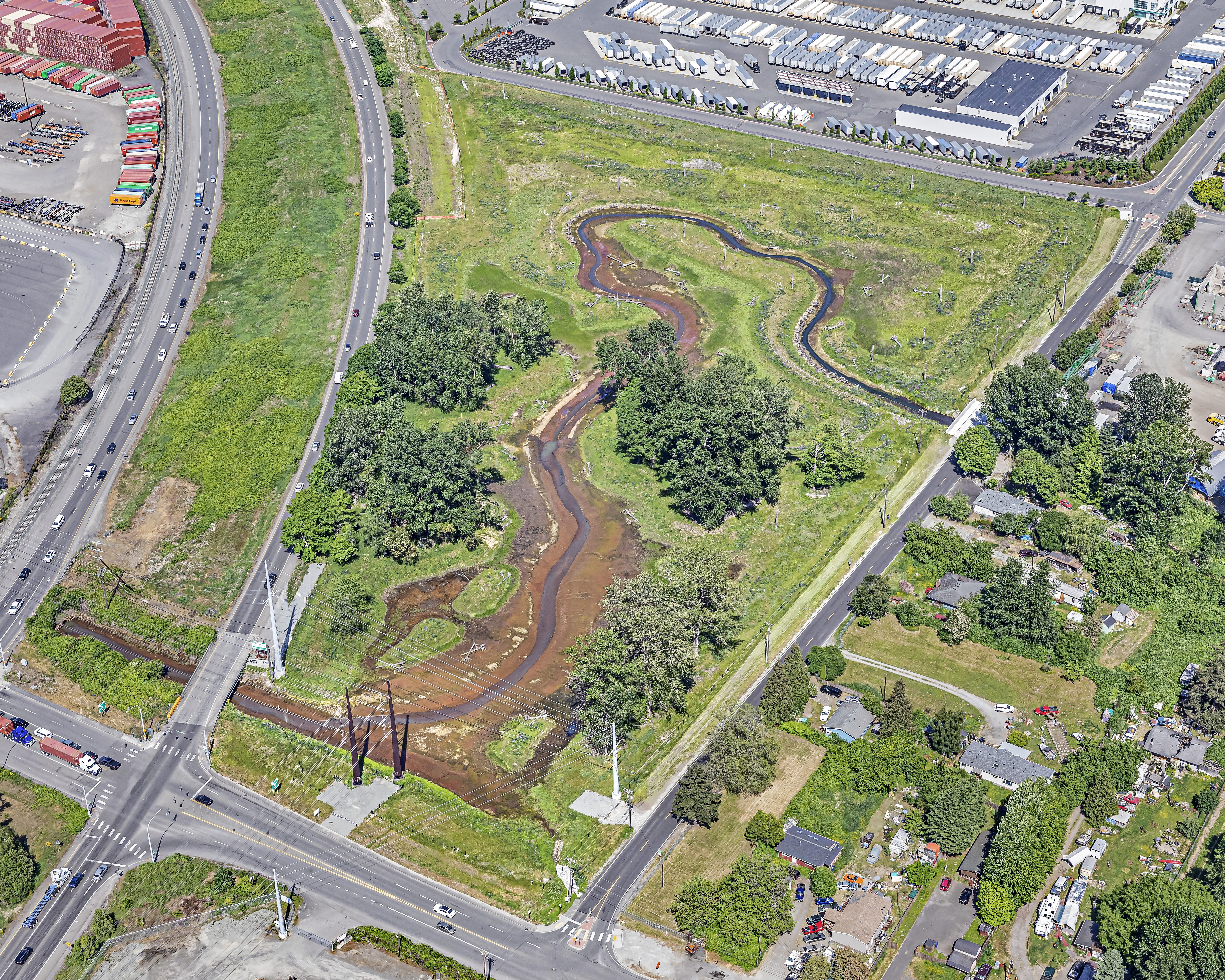
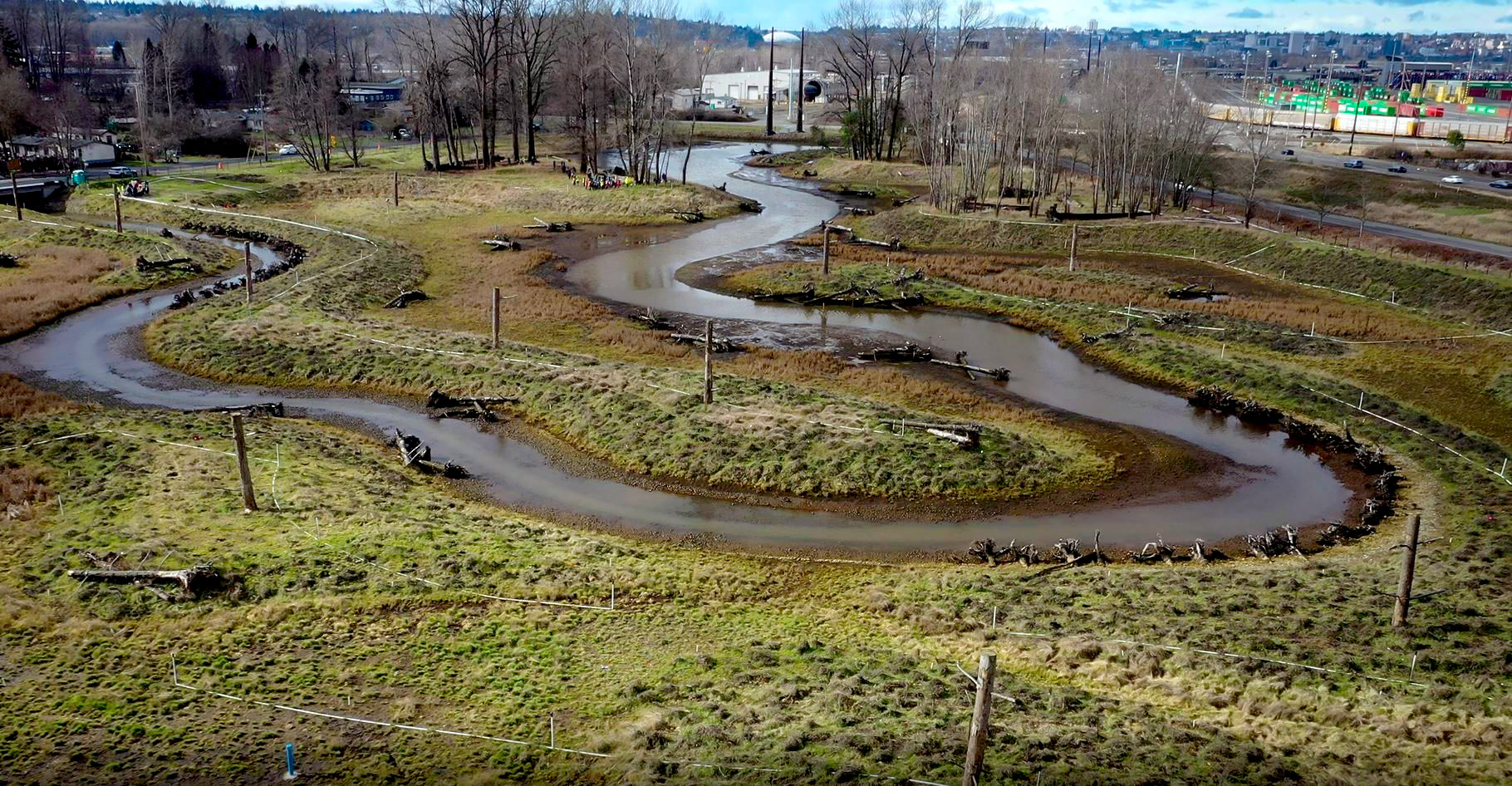
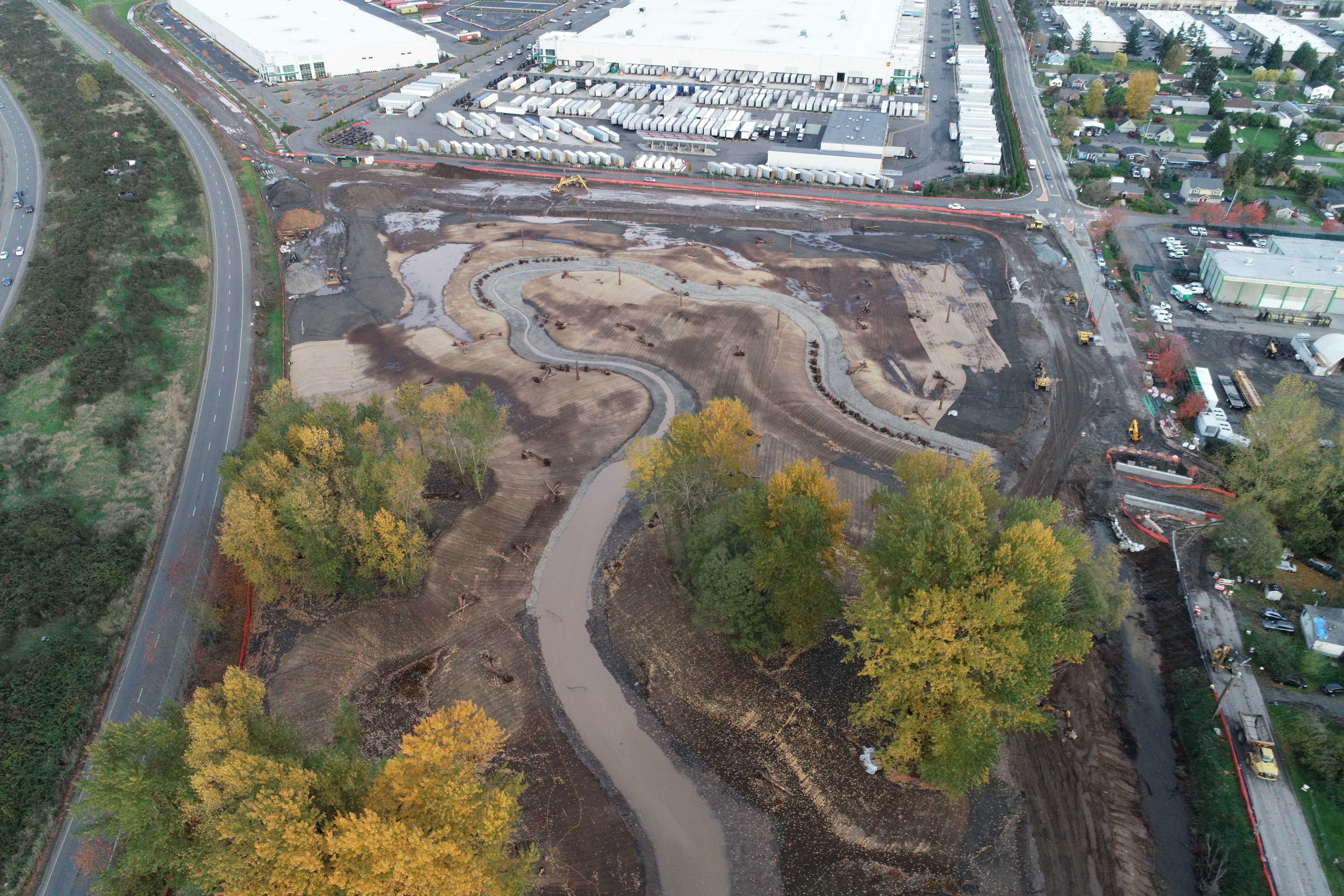
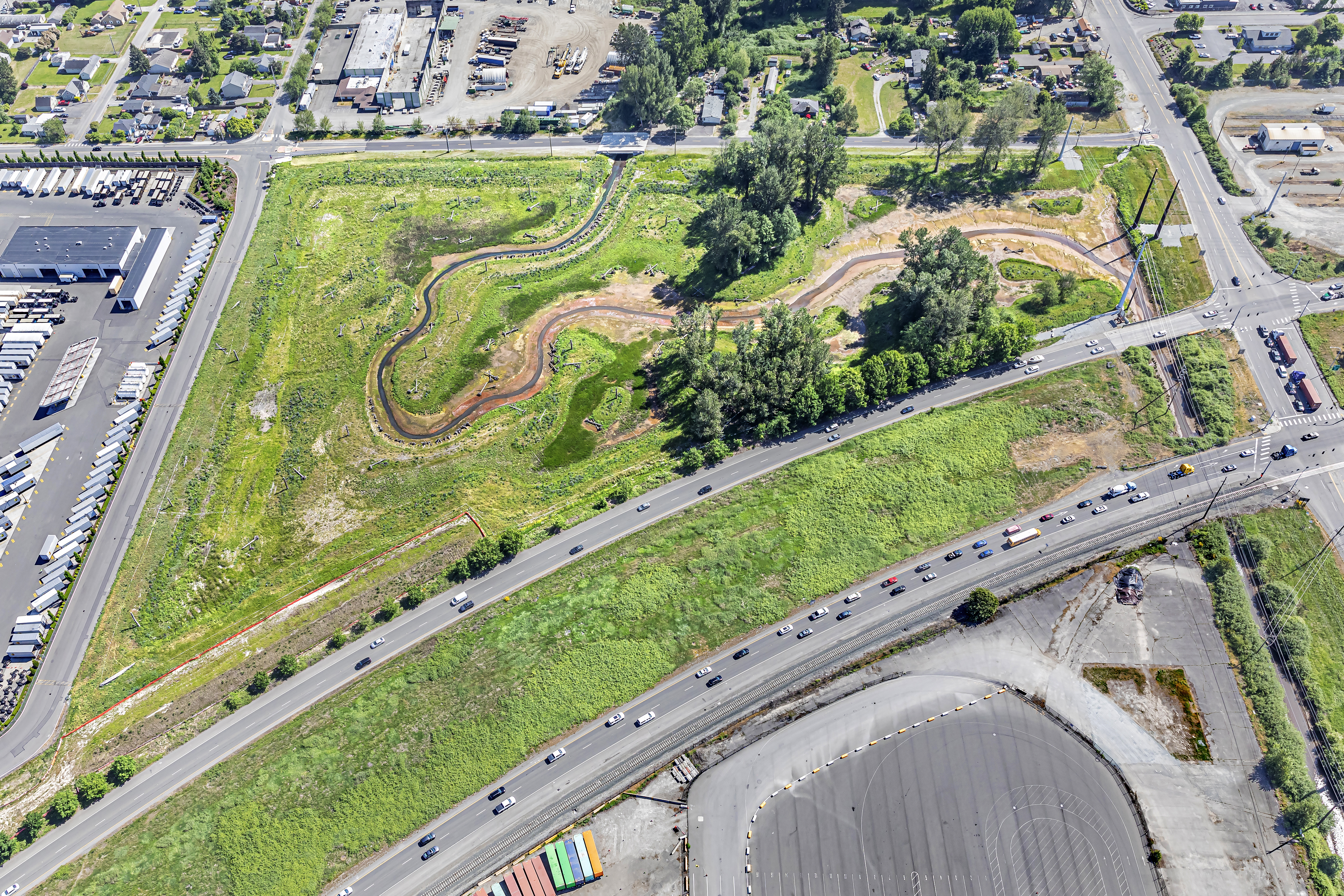
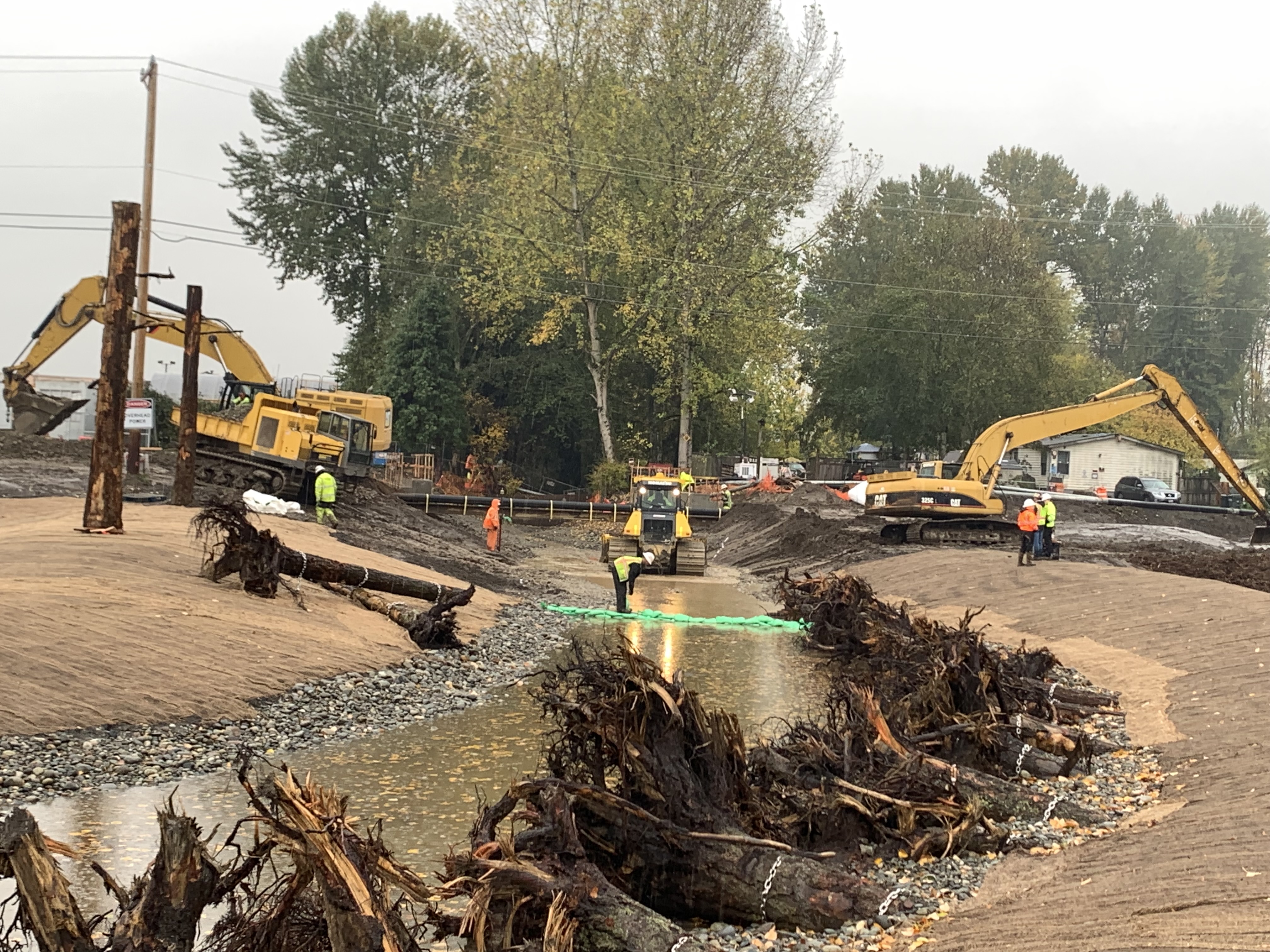
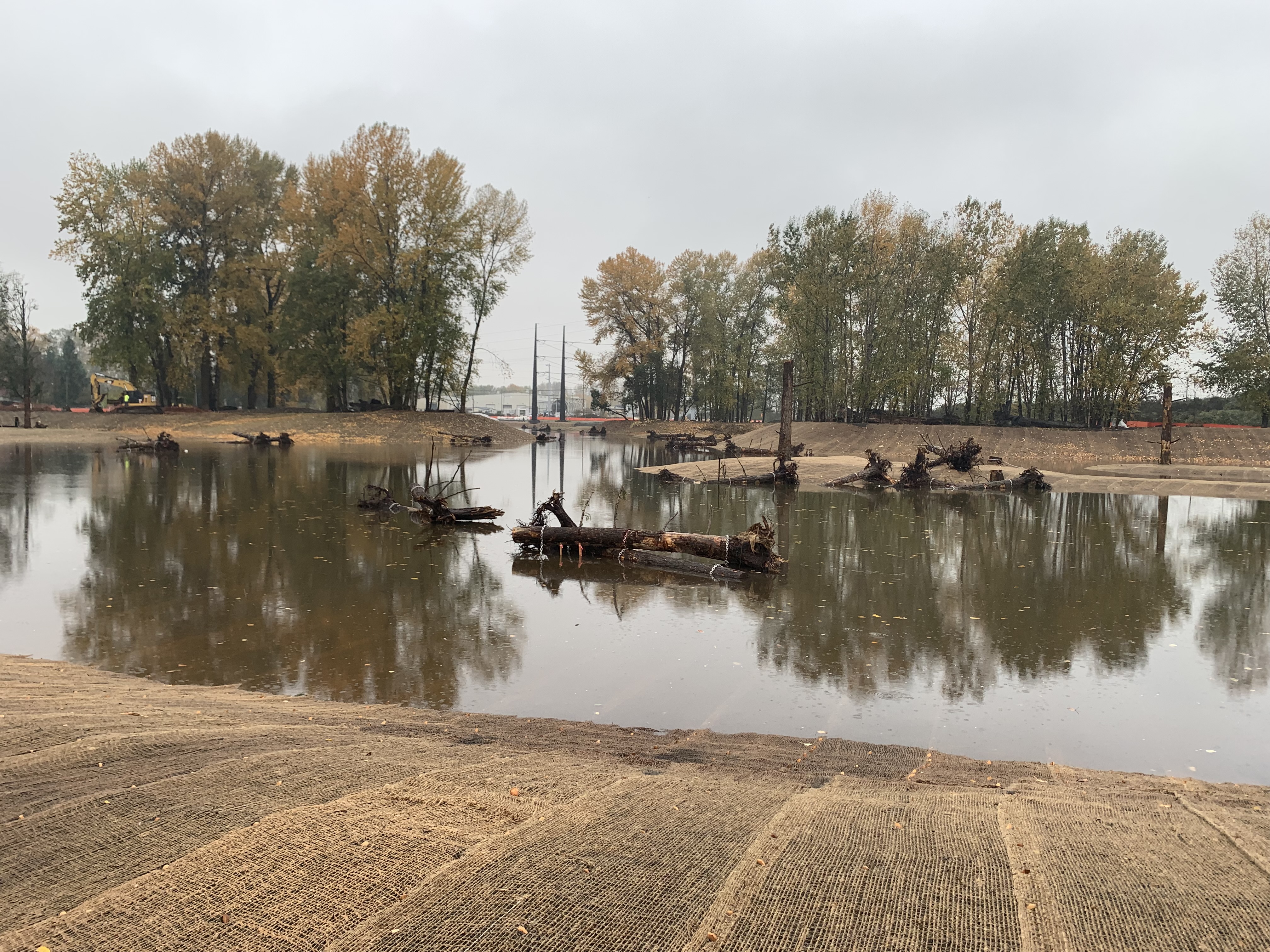
Baumwelt served as landscape designer, project manager, and construction observation lead for the Lower Wapato Creek Habitat Project, a major ecological restoration effort led by the Port of Tacoma. The project re-established approximately 20 acres of tidally influenced estuary and restored fish-bearing stream habitat within an area that had previously been highly altered by historic industrial and drainage infrastructure.
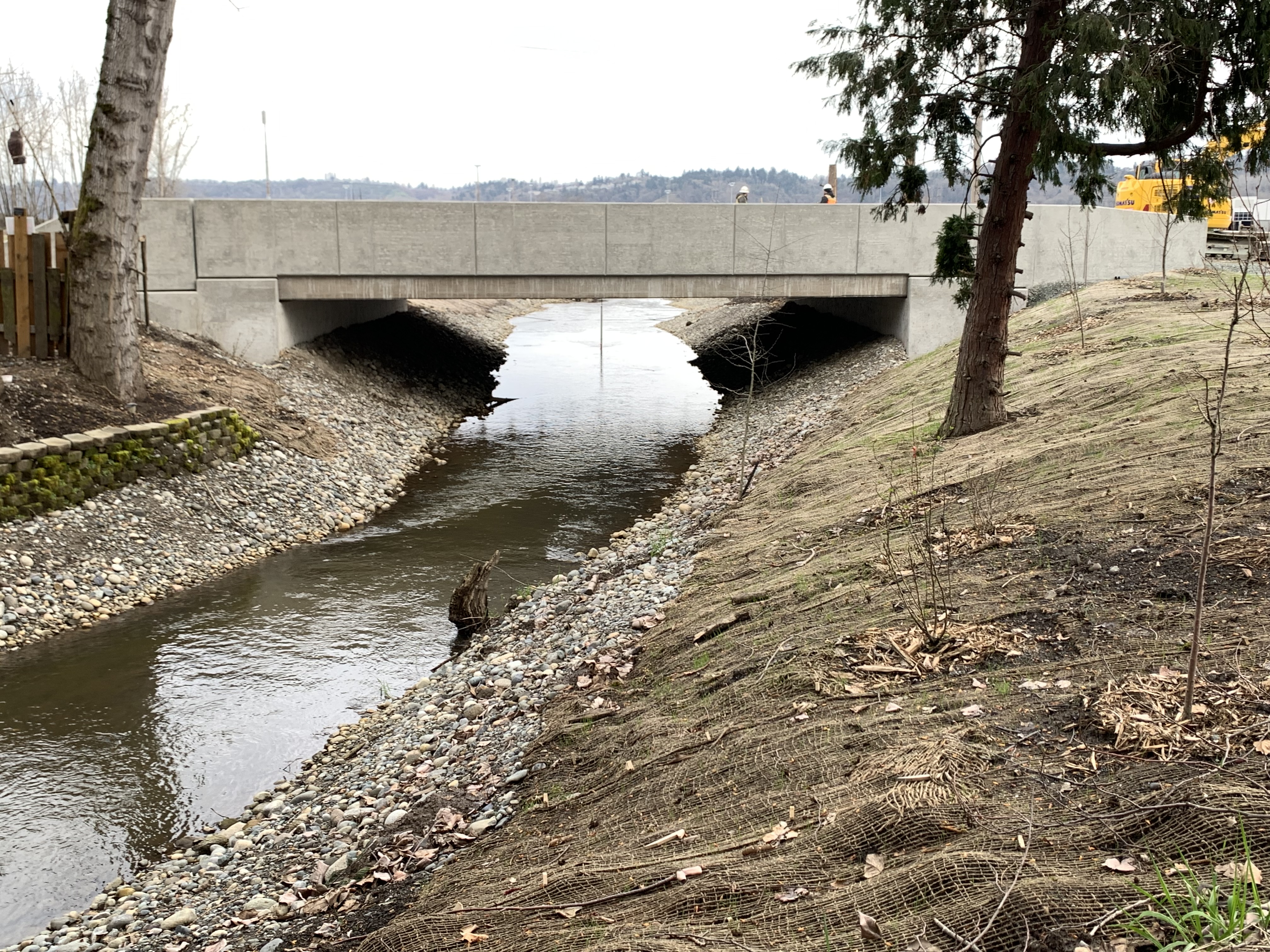
A key component of the project involved replacing existing fish-barrier culverts with a new fish-passable full-span bridge, restoring hydrologic connectivity and improving access for migrating fish species. In addition, Wapato Creek was relocated from a straightened drainage ditch into a longer, meandering stream channel designed to support natural processes and create a more resilient aquatic system. The new channel and surrounding wetlands were carefully shaped to reintroduce tidal influence and support a diverse mosaic of marine wetland habitats.
The restoration design incorporated multiple wetland planting zones to support a wide range of ecological functions and improve both the quantity and quality of habitat for fish and wildlife. Native vegetation was strategically installed to provide food sources, cover, and long-term habitat structure within the restored estuarine environment.
Baumwelt led coordination of the interdisciplinary design team throughout both design and construction phases. The firm managed collaboration among wetland scientists, structural engineers, marine shoreline engineers, and electrical engineers while overseeing the overall project schedule and facilitating design and construction meetings. Baumwelt also developed a design analysis methodology to ensure that the proposed planting plan would meet the Port’s long-term habitat performance targets.
Through careful design coordination and consistent construction oversight, the project successfully transformed a previously constrained drainage system into a functioning estuarine habitat corridor. The restored wetlands and stream channel now provide improved fish passage, expanded habitat for wildlife, and increased ecological resilience within the Wapato Creek watershed, supporting the Port of Tacoma’s long-term environmental stewardship goals.